
A Structured Apporach to Holistic Developement
Being a part of Aster, we believe in “learning by doing”. Our focus is on developing multiple intelligences at analytical, practical, creative and emotional levels.
Discover new ideas
through experiences
Develop analytical
and critical thinking
Learn through activities
and practical work
Express ideas through
creativity and innovation
Build confidence
and life skills
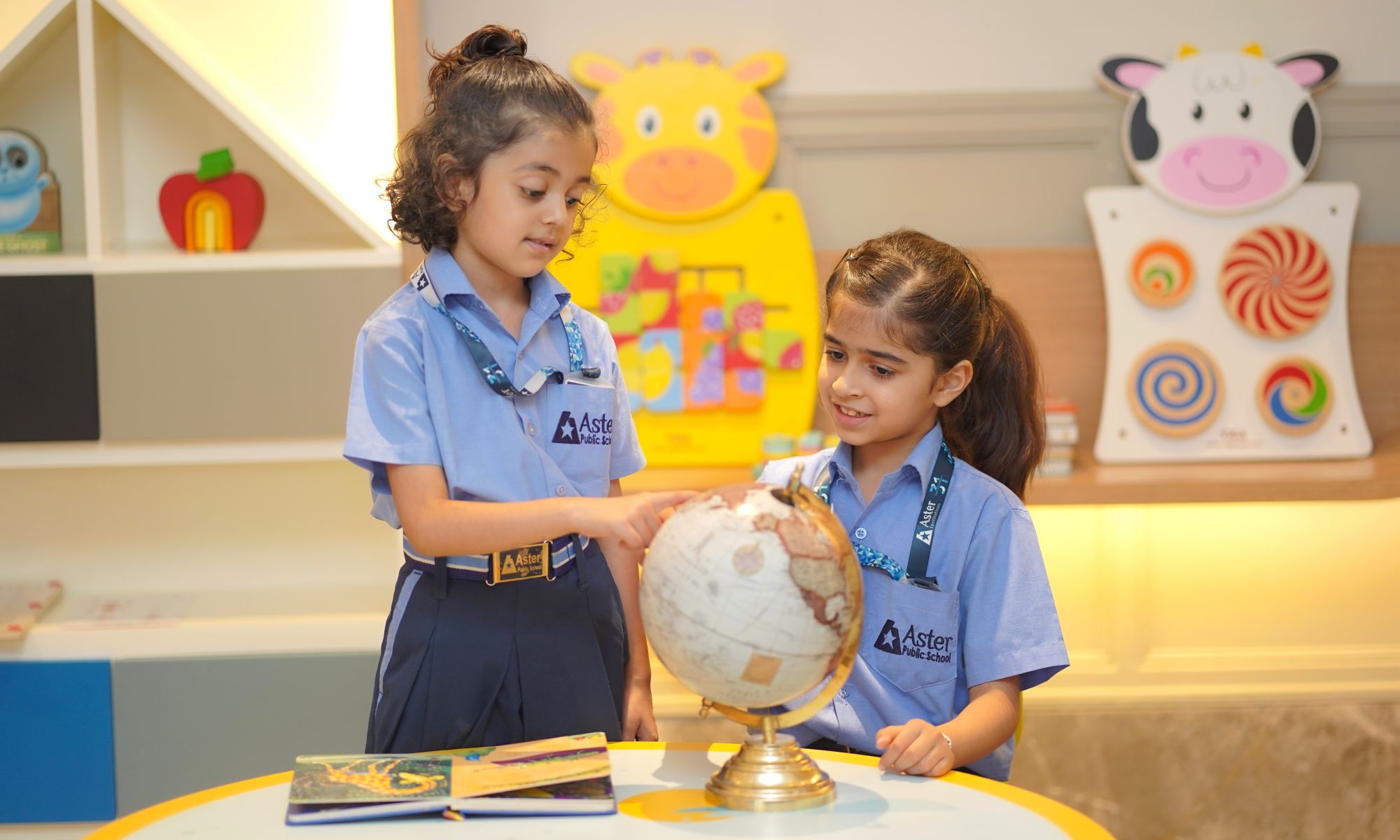
Students develop analytical, practical, creative and emotional abilities through repeated critical thinking and problem-solving experiences.
Technology-integrated teaching-learning methods support a holistic educational experience and make learning engaging and meaningful.
Integrated learning and art integration encourage creativity and connect classroom concepts with meaningful, hands-on experiences.
Curricular and co-curricular activities include sports, field trips, excursions, community service, life skills, fine arts, environmental sensitivity, languages and technology.
Our curriculum is divided into broad learning stages, designed to support children's development from pre-school through senior secondary education.
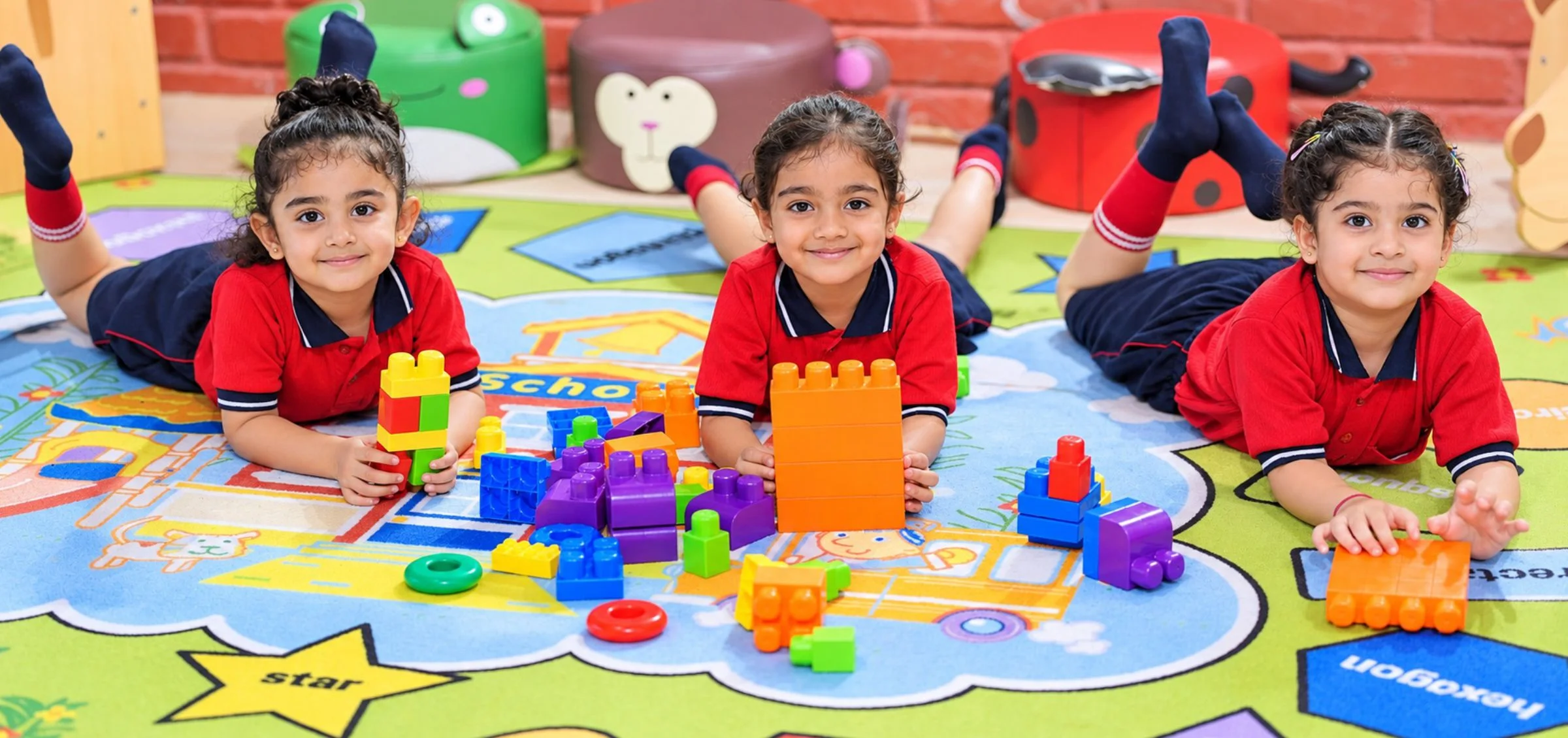
Children are introduced to a social environment through informal play-way activities such as playing, singing, dancing, making friends, sharing, caring and conversing. They learn to express their needs, develop emotional stability and practise manners and etiquettes. This preparatory stage encourages independence from parental dependency and supports motor, cognitive, speech and sensory development.
This preparatory unit introduces children to the more formal education system that begins in Class I. The Montessori method supports mental, physical, social and emotional development. Play-way activities, games, art and craft, singing and dancing nurture social, language, physical and motor skills, creative expression and cognitive development.
The focus is on building core skills in English, Hindi, Arithmetic and Environmental Sciences, including Social and General Science. A third language, such as Sanskrit or French, is introduced in Class V. Art and craft, music, dance, physical education, games, library and computer education are part of the regular timetable, with hands-on experiences and art integration.
The aim is to develop core skills and competencies, with emphasis on learning by doing and creative thinking. Students study Hindi, English, French and Sanskrit; Mathematics, including Arithmetic, Algebra and Geometry; Social and Environmental Sciences, including History, Geography, Civics and Economics; and Science and Technology. Computer, Music, Art and Sports support overall development.
The focus is on all-round development through a broad and balanced understanding of English, Hindi, Sanskrit and French; Mathematics, Science, Social Science, Information Technology and Physical Education. The learner-centred curriculum builds scholastic and co-scholastic skills, critical thinking, problem-solving abilities and creativity.
This stage provides opportunities for physical, intellectual and social development while nurturing life skills, self-esteem and empathy towards different cultures. The curriculum offers Science (Medical and Non-Medical), Commerce and Humanities. Science (Medical) subjects: Physics, Chemistry, Biology, English, Physical Education and one of Computer Science, Economics, Psychology or Hindi.